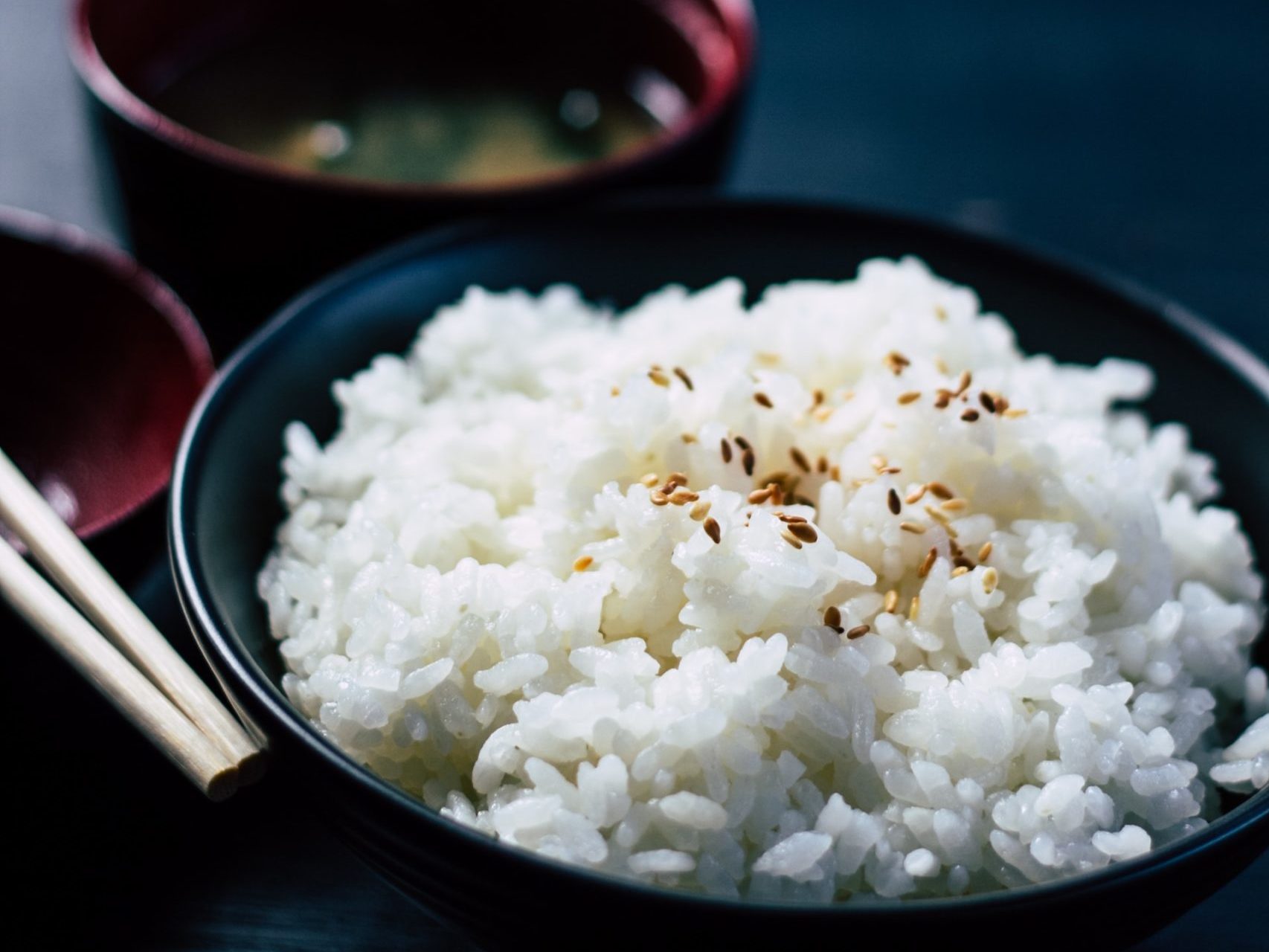
Embark on a culinary journey as we delve into the art of cooking Japanese rice. In this guide, we’ll uncover the secrets to achieving that coveted balance of stickiness and flavor that defines this essential element of Japanese cuisine. Whether you’re a kitchen novice or a seasoned chef, get ready to bring the authentic taste of Japan to your table. Let’s dive into the simplicity and elegance of cooking perfect Japanese rice.

Ready to get started?
Ingredients
- Japanese short-grain rice (famously known as “Sushi Rice.”)
- Water
Do you need a rice cooker?
While using a rice cooker can make the process of cooking Japanese short-grain rice more convenient and consistent, it’s not strictly necessary. You can also cook Japanese rice on the stovetop with a pot. The key is to pay attention to the water-to-rice ratio, the rinsing process, and the cooking time. A rice cooker simplifies these steps and ensures even cooking, but with careful attention, you can achieve excellent results using a pot.
So, while a rice cooker is a helpful kitchen appliance, it’s not a requirement for cooking Japanese rice.
Instructions with a rice cooker
- Measure the Rice:
- Use the rice cooker cup. Usually the rice cooker comes with a measuring cup.
- Rinse the Rice:
- Place the rice in a fine-mesh sieve or a bowl.
- Rinse the rice under cold running water until it runs clear.
- Click here for information on how to properly wash rice.
- Add Water:
- Place the rinsed rice in the rice cooker.
- Add water to the line marked on the rice cooker.
- Soak the Rice (Optional):
- Soak the rice in water for about 30 minutes for improved texture.
- Cooking:
- Follow the rice cooker instructions.
- The cooker will automatically switch to “warm” when done.
- Let It Steam:
- Allow the rice to steam in the cooker for an additional 10-15 minutes after it switches off.
- Fluff and Serve:
- Gently fluff the rice with a rice paddle or fork.
- Serve and enjoy!
Instructions without a Rice Cooker (Using a Pot)
- Measuring Rice and Water:
- Ratio of Rice to Water:
The ideal ratio is approximately 1.2 times by volume and 1.4 times by weight. - For 1 cup of rice (180ml or 150g), use 210ml (210g) of water.
- Measuring without Special Tools:
- Rinse the rice thoroughly.
- Drain the water and measure it in a container before transferring it to the pot.
- Measure an equal amount of water as the volume of rice, then add it to the pot for cooking.
- Ratio of Rice to Water:
- Rinse the Rice:
- Place the rice in a fine-mesh sieve or a bowl.
- Rinse the rice under cold running water until it runs clear.
- Click here for information on how to properly wash rice.
- Soak the Rice (Optional):
- Soak the rice in water for about 30 minutes for improved texture.
- Cooking Process:
- Place the rice and water in a pot, cover it, and bring it to a boil over high heat.
- Boiling and Simmering:
Once it boils vigorously, reduce the heat to as low as possible and let it simmer for 10 minutes. - Steaming:
After 10 minutes, briefly turn up the heat for about 5 seconds, then turn off the heat and let it steam for an additional 10 minutes.
- Fluff and Serve:
- Gently fluff the rice with a rice paddle or fork.
- Serve and enjoy!
Any pot with a lid will work well for this method!
How to Rinse the Rice
1. First Rinse:
- Measure rice and place it in a bowl or rice cooker.
- Add water, gently rotate rice, and quickly discard the water.
- Use filtered water for better quality.
2. Gentle Scrubbing:
- Gently scrub nearly dry rice with a shaking motion.
- Stir in one direction about 20 times for friction.
3. Water Replacement:
- Repeat the process of quickly adding and discarding water about twice.
- Stop when the water is slightly clear, showing a faint visibility of the rice.
Note:
- Swiftly discard water to avoid bran smell absorption.
- Avoid vigorous scrubbing to prevent rice breakage.
- Don’t rinse with added water; it hinders the scrubbing process.
Why use cold water?
If the water temperature is too high, the dissolved sugars in the washing water are more likely to adhere to the rice. This can be a cause for the loss of flavor in the rice. When rinsing rice with regular water instead of hot water, the temperature of the water gradually increases inside the rice cooker. As a result, the time for breaking down the starch in the rice into sugar becomes longer, enhancing the sweetness and flavor of the rice.
Conclusion
Cooking rice is an art that elevates your meals, and this straightforward guide ensures you achieve the perfect consistency and taste every time. Experiment with different rice varieties and enjoy the satisfaction of creating a staple that complements a wide range of dishes.
Happy cooking! 🍚
コメント